Getting more work · 9 min read
A plumber's website: built to win the job, not just look nice
Most plumber websites are an online business card. They list the services, show a stock photo of a spanner, and quietly lose work every day. A good plumbing website is something else entirely, a machine for turning a stranger in trouble into a booked job, and the difference has almost nothing to do with how pretty it looks.
The test is brutally simple. Picture a homeowner on their phone, water spreading across the floor, who has just landed on your site. Can they understand that you can help and act, by calling or enquiring, in under a minute? If yes, you have a lead machine. If they have to pinch-zoom, hunt for a number or guess at a price, they are already dialling someone else. Here is how to build the version that wins.
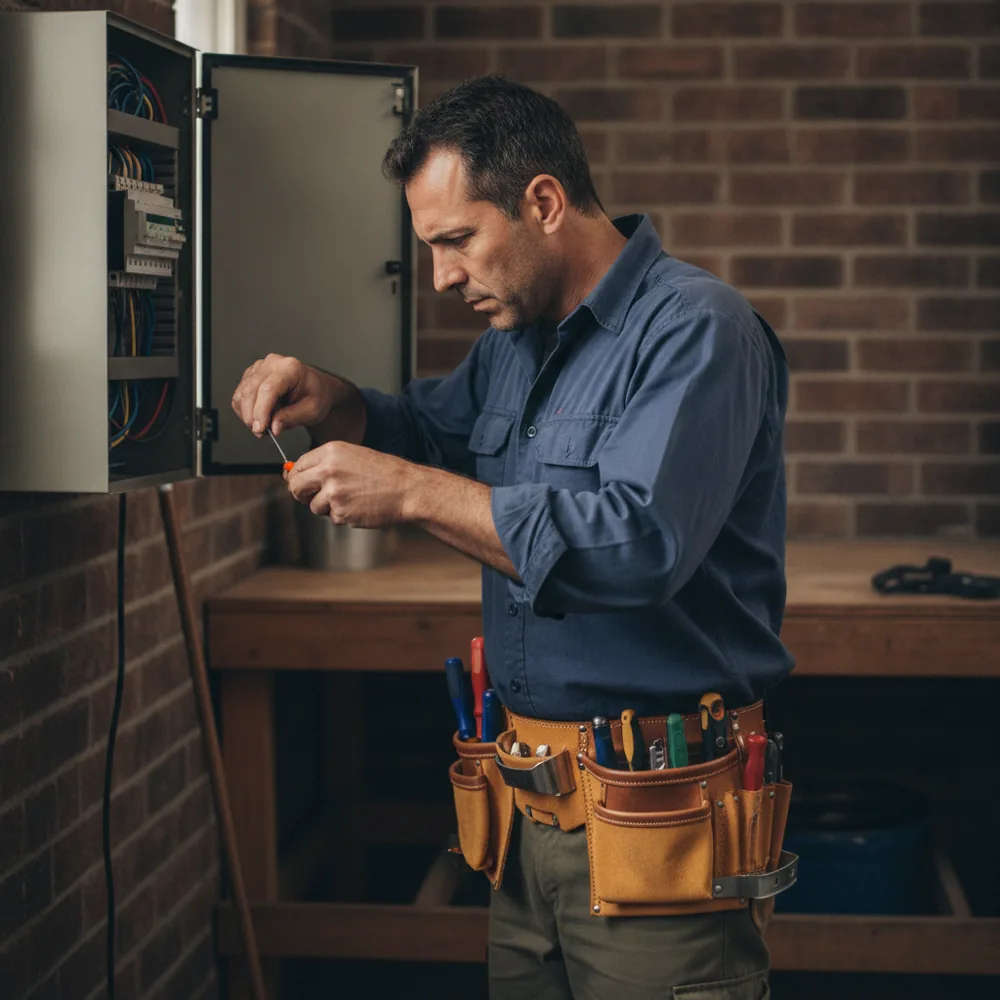
Picture the visitor, then build for them
Every decision gets easier once you hold the real visitor in mind. They are usually on a phone, not a desktop. They often have a problem right now, so patience is near zero. And they are deciding in seconds whether you look capable and reachable. That mental picture, not your taste in design, should drive the whole site.
It means mobile comes first, not as an afterthought. It means the fastest path to action wins. And it means the things that build instant trust, real photos, reviews, a licence number, beat anything clever. Build for that anxious person on a phone and everything else falls into place.
The anatomy of a plumber's site that converts
A plumbing website only has a few real jobs to do. Get these right, in roughly this order of importance, and the rest is detail:
- A tappable phone number fixed at the very top, on every page. For an urgent caller this is the whole point of the site, so never make them scroll or hunt for it.
- A fast load on mobile. Every extra second of load time bleeds calls, and a heavy, animated site is slowest exactly where it matters most, on a phone on patchy data.
- A clear page for each main service and each suburb you cover, like hot water repair plus your area, which doubles as your SEO foundation and answers what can you actually do for me.
- Trust signals up front, your Google reviews, your licence number, and real photos of your work, your team and your van, not stock images that fool nobody.
- A way to get a price or estimate without phoning, for the planned, comparing-quotes visitor who is not in a panic. This is where nearly every plumber site falls down.
What you can safely skip
Just as important is what not to waste money on, because the wrong spend actively hurts. You do not need a sprawling custom build, a blog you will never update, slick animations, or stock photos of someone else's tidy pipework.
Worse, the flashy stuff often slows the site down, which costs you the urgent calls that pay best. A clean, fast, honest three-page site beats a beautiful slow one every single time. When in doubt, cut it.
What a plumber's website should cost
You do not need a five-figure budget. Costs range widely, from a few hundred dollars for a decent template you set up yourself, to a few thousand for a custom build from a developer. Either can work.
What matters is where the money goes. Spend it on speed, a clear service-and-suburb structure, and lead capture, the things that turn visits into jobs. Do not spend it on visual flourishes that look impressive in a portfolio and convert nobody. A good rule: if a feature does not help the anxious person on a phone act faster, it is not worth paying for.
The feature nearly every plumber site is missing
Here is the hole on almost every plumbing website. A visitor with a hot water failure or a bathroom they want redone wants a rough price before they commit to a call. Your site cannot give them one, so they bounce, to a competitor who answers faster or to a lead marketplace that will sell them back to you. You paid, in SEO or ads, to bring that visitor in, and lost them at the final step.
An instant estimate tool closes it. The visitor answers a couple of questions, gets a ballpark, and hands over their name and number to see it. That single feature turns the site from a business card into a lead machine, and unlike a marketplace lead, this one is yours outright with no per-lead fee. You can see exactly how it works, try the estimator below.
What a plumber's website needs (and what to skip)
| Element | Worth it? |
|---|---|
| Tappable phone number up top | Essential |
| Fast load on mobile | Essential |
| A page per service and suburb | Essential |
| Instant estimate / quote tool | Essential |
| Reviews and licence numbers | Essential |
| Regularly updated blog | Optional |
| Custom animations | Skip |
| Stock photos of other people's work | Skip |
By the numbers
Hot Water System Cost Calculator
This is the feature most plumber sites are missing, a live estimator that turns a comparing-quotes visitor into a named enquiry instead of a bounce:
Want one of these on your own website?
Set your prices and brand it in two minutes, paste two lines or share a link, and every estimate lands in your inbox as a named lead. Free forever, no card.
See it for your trades business →Related guides
Frequently asked questions
What should a plumber's website have?
A tappable phone number fixed at the top of every page, a fast mobile load, a clear page per service and suburb, trust signals like reviews and a licence number, and a way to get a price without phoning. That last one, an instant estimate tool, is what most plumber sites lack and what turns visitors into booked jobs.
How much does a plumber website cost?
Anywhere from a few hundred dollars for a good template you set up yourself to a few thousand for a custom build. Both can work. Spend the money on speed, clear service-and-suburb structure and lead capture, not on animations or stock photos that win no jobs.
Does a plumber really need a website?
Yes, but not a fancy one. Even with most urgent calls coming through Google's map pack, a fast, clear website is where comparing and planned-job customers decide to trust you, and where you capture the leads you would otherwise lose to competitors or marketplaces.
Why is my plumbing website not getting calls?
Usually one of a few reasons: the phone number is not tappable or is buried, the site is slow on mobile, there are no trust signals, or there is no way to get a price so visitors bounce. Fix those before assuming you need a whole new site.
Should a plumber show prices on their website?
For planned, non-emergency jobs, yes, at least indicatively. A visitor comparing quotes who cannot get any sense of price will leave to find one who offers it. An instant estimate tool gives a ballpark and captures the lead at the same time.